
In recent years, protein bars have become a core product in the global healthy snack market-and for good reason.
As fitness trends gain momentum and healthy eating concepts go mainstream, more consumers are turning to protein bars as a convenient, nutritionally balanced choice-whether for a quick snack or a meal replacement.
What makes them a standout in healthy and sports nutrition? Three key strengths:
Unmatched Portability: Compact and ready-to-eat, they fit perfectly into busy lifestyles-ideal for office workers grabbing a midday pick-me-up, travelers on the go, or athletes post-workout.
High Protein Power: Packed with quality protein (typically 10-20g per bar), they deliver efficient energy and muscle support-exactly what athletes need for recovery, and what anyone wants for long-lasting fullness.
Healthy Snack Alternative: Ditching the sugar, excess oil, and artificial additives of traditional snacks (like chips or candy), protein bars use natural ingredients to offer a guilt-free option that fuels the body well.
For athletes, professionals, or anyone prioritizing health, protein bars aren't just a snack-they're a reliable choice that meets both market trends and real-life needs.
How to make protein bar?
Want a quick look at how protein bars are made? It's a strict, well-controlled process-powered by specialized equipment, and every step matters for safety, flavor, and consistency.
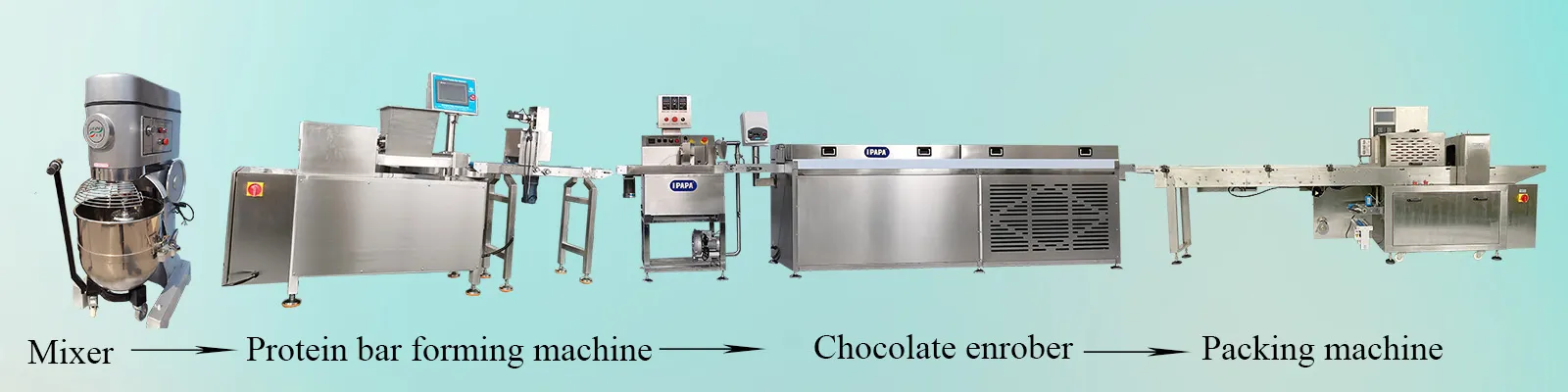
Ingredient Selection & Mixing: Start with high-quality ingredients (protein powder, nut pieces, date paste, etc.). Mixers blend raw materials thoroughly to ensure a uniform texture, then put dough into protein bar machine.
Pressing / extruding & Cutting: The protein bar machine shapes the mixed dough into thick sheets, then its built-in cutting module trims them into standard bar sizes.
Flavor Boost (Optional): For extra taste, some bars get coated with chocolate. Our protein bar machine and energy bar machine can be connected to chocolate coating lines, with precise controls to keep the coating thickness even.
Cooling: After forming, bars move to a cooling tunnel-often integrated with the protein bar machine and energy bar machine to prevent sticking. This step can help chocoating coating cooling or make sticky fruit bar packing more easily.
Sealed Packaging: Finally, both the protein bar machine and energy bar machine can be linked to automatic packaging lines, sealing bars in airtight packaging to keep them fresh longer and ensure hygiene.
Every step, supported by reliable protein bar machine and energy bar machine systems, is carefully checked to deliver safe, tasty, and consistent bars.
Step 1: Raw material preparation
In protein bar production, ingredient selection is the most critical first step. Traceable raw materials that meet international food safety standards are the key to ensuring product quality.
High-quality proteins-like whey protein powder, soy protein, or pea protein-don't just add rich nutritional value; they also create different texture experiences. Meanwhile, pairing them with natural sweeteners, grains, and nuts not only boosts flavor but also meets diverse dietary needs.
Before making your protein bars, be sure to prepare all the required raw materials in advance, based on the specific type of bar you want to produce.

Step 2: Mix
uniform distribution of ingredients in each batch. Uniform mixing not only guarantees consistent nutritional value for every protein bar but also enhances the overall taste experience. For factories with large-scale production, efficient mixing equipment is a crucial guarantee for maintaining stable quality.
Shanghai Papa offers mixers of different models to meet your needs for different production volumes.
Step 3: forming
In the forming stage, mixed raw materials can be shaped into cylindrical or long protein bars via a protein bar extruder machine. If your raw materials are hard and contain large-grain cereals, a cereal bar forming machine can also be used for press, shaping and cutting. We can match corresponding temperature-controlled mixers and sugar cooking pots for you. Different brands can choose different specifications and shapes based on their market positioning, thereby achieving differentiated competition.
Step 4: Bake to set
Not all protein bars require baking, but for some, this step can significantly improve the taste and stability. Baking can achieve a crispier texture, while cooling and setting ensure better forming of the product.

Step 5: Protein bar coating chocolate
To boost a protein bar's taste and visual appeal, many brands add a coating. For example, a chocolate coating not only enhances flavor but also becomes a unique selling point of the product.
Chocolate coating machines can significantly improve production efficiency, and different models of coating equipment can match various types of protein bar machines-perfect for seamless integration into your existing production line.

Step 6: Cooling
When chocolate protein bars are cooled to the right temperature for an appropriate time, it keeps their shape stable-preventing sticking or deformation. This also creates optimal conditions for the subsequent coating or packaging process, ensuring a smooth production flow.

step 7: Packing
Efficient packaging equipment ensures that products remain in optimal condition during transportation and sales.

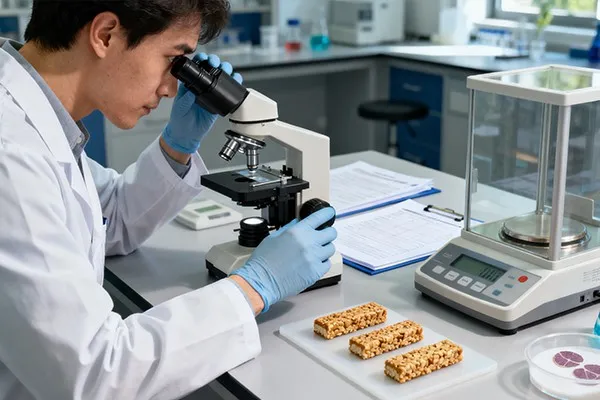
step 8: Quality Inspection
Before leaving the factory, every batch of protein bars undergoes strict quality inspection. This includes testing of nutritional components, microbial safety, and packaging integrity-ensuring each bar meets high standards for safety and quality.
Through the complete protein bar production process above, we not only demonstrate end-to-end management-from ingredient selection to finished product shipment-but also emphasize the importance of each step to product quality, taste consistency and food safety.
Whether it's ingredient preparation, mixing, forming, cooling, baking, coating or packaging, every step reflects the combination of modern equipment and international standards. This enables us to provide high-quality, high-value-added protein bar products for the global market.


